The Reel Journal
Behind-the-scenes stories, actor profiles, and deep-dives into the films and shows of cinema's golden age.

Harold Lloyd's Public Domain Silent Comedies
The third of silent comedy's holy trinity — the daredevil with glasses who hung off a clock
When critics now name silent comedy's three great stars, they list Charlie Chaplin, Buster Keaton, and Harold Lloyd. In the 1920s, those names were reversed. Lloyd was the biggest box-office star of the three — his featu…
Harold Lloyd's Public Domain Silent Comedies
When critics now name silent comedy's three great stars, they list Charlie Chaplin, Buster Keaton, and Harold Lloyd. In the 1920s, those names were reversed. Lloyd was the biggest box-office star of the three — his features routinely out-grossed Chaplin's and Keaton's. The man wi
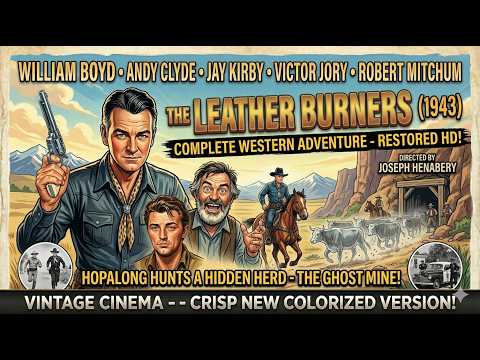
Lash LaRue: The Whip-Wielding Cowboy Cult Hero
Among the dozens of B-Western stars who churned out features during the 1940s, none had a more distinctive identity than Lash LaRue. Where Roy Rogers wore elaborate cowboy finery, where Gene Autry was conversational and folksy, where Hopalong Cassidy was courtly in black-and-silv
The Lone Wolf Mystery Series
The Lone Wolf — gentleman thief Michael Lanyard, reformed and turned detective — appeared in 24 feature films across six decades. The longest-running and most consistent cycle was Columbia Pictures's 15-film series between 1935 and 1949, starring multiple actors in the title role

Robert Mitchum's Public Domain Film Noir
Robert Mitchum's screen persona — heavy-lidded, world-weary, dangerously charming — defined one strain of American film noir. Mitchum starred in over 130 features across a 55-year career, including some of the most enduring noirs ever made (Out of the Past, 1947; The Night of the
Roscoe "Fatty" Arbuckle's Surviving Films
In 1920, Roscoe "Fatty" Arbuckle was silent comedy's biggest box-office star — bigger than Chaplin, bigger than Lloyd, the highest-paid actor in Hollywood. By the end of 1921, his career was destroyed and his name had become permanently associated with one of America's first nati
Charley Chase: The Forgotten Hal Roach Master
Among Hal Roach Studios's deep bench of comedy stars, Charley Chase was the studio's most prolific and arguably its most polished performer — nearly 200 comedies between 1924 and 1936, plus a parallel career as director and producer. Where Laurel and Hardy got the lasting fame an

Bob Steele: The B-Western Workhorse You Should Know
If you were a B-Western fan in the 1930s and 40s, you knew Bob Steele. Across four decades, Steele starred in over 100 Western features at every Poverty Row studio that produced them — Tiffany, Monogram, Republic, PRC, plus stints at the majors. By volume of starring vehicles, St
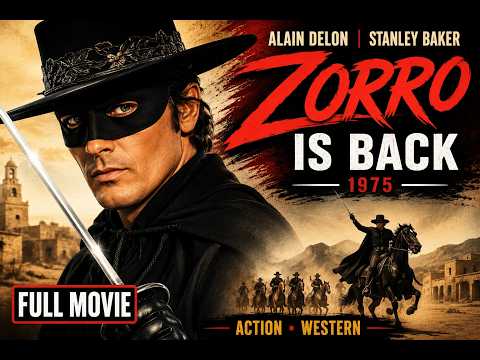
Best Public Domain Pirate and Swashbuckler Films
The swashbuckler — pirate adventures, Renaissance sword-fights, capes-and-rapiers heroism — was one of classical Hollywood's most reliable subgenres. Douglas Fairbanks Sr. invented the modern American swashbuckler in the silent era. Errol Flynn perfected it in the 1930s and 40s.

Harry Langdon: The Fourth Great Silent Comedian
Between roughly 1924 and 1927, Harry Langdon was the fourth great silent-comedy star in American cinema, briefly out-grossing both Buster Keaton and Charlie Chaplin. By 1928, his career had collapsed completely. By the early 1930s, he was reduced to making bottom-tier two-reelers

Flash Gordon Serials: Buster Crabbe's Three Space-Opera Marathons
Flash Gordon's three Universal Pictures serials — produced in 1936, 1938, and 1940 — established the visual and narrative template for American space-opera cinema. All three serials starred Buster Crabbe as the rocket-pilot hero adapted from Alex Raymond's syndicated comic strip.

Beast from Haunted Cave (1959): Monte Hellman's Wyoming Silver-Mine Creature Feature
Beast from Haunted Cave (1959) is the 75-minute directorial debut of Monte Hellman, who would later make the cult Westerns The Shooting (1966) and Ride in the Whirlwind (1966) and the existentialist road picture Two-Lane Blacktop (1971). The Beast from Haunted Cave isn't on the a
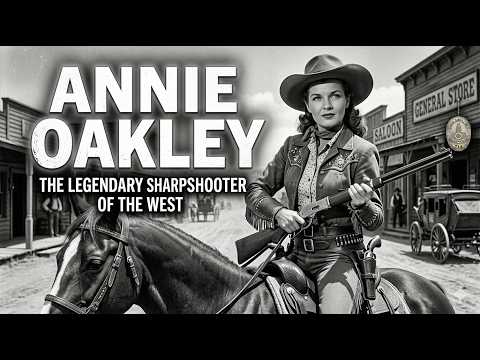
Annie Oakley TV Series: Gail Davis and the Wild-West Half-Hour Western
Annie Oakley (1954-57) was ABC's syndicated half-hour Western television series starring Gail Davis as the historical sharpshooter. 81 episodes were produced over three seasons. The series fictionalized Annie Oakley's biography substantially — the historical Oakley was a Wild Wes
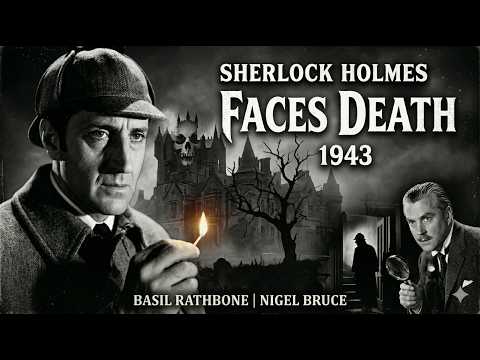
Every Sherlock Holmes Film Worth Watching in the Public Domain
Sherlock Holmes has been adapted to film and television over 250 times since the 1900 silent shorts that started his cinematic life. A substantial portion of the early-and-mid-20th-century Holmes filmography fell into the public domain through copyright-renewal lapses and the ban

Equinox (1970): The Student-Made Horror That Predicted The Evil Dead
Equinox (1970) is a 71-minute cult horror picture that started life as a USC graduate-film project in 1967. The original 16mm version was directed by Mark Thomas McGee. Producer Jack H. Harris bought the project and hired director Jack Woods to shoot additional footage that expan

Creature from the Haunted Sea (1961): Roger Corman's Bargain-Basement Monster Comedy
Creature from the Haunted Sea (1961) is Roger Corman's deliberately ridiculous comedy-horror — shot in five days in Puerto Rico while his crew was already on location for another picture. The monster is a moss-covered humanoid with ping-pong-ball eyes operated by visible black st
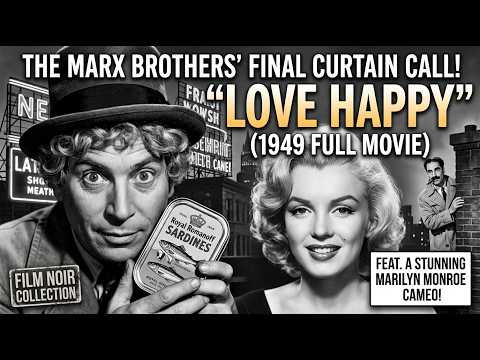
O. Henry's Full House (1952): The Anthology Film That Caught Marilyn Monroe Mid-Rise
O. Henry's Full House (1952) is a 117-minute anthology film from 20th Century-Fox adapting five short stories by O. Henry — each segment directed by a different filmmaker. The picture is most often watched today for its second segment, The Cop and the Anthem, which features Charl

The Atomic Age Horror Boom: How 1950s B-Movies Crystallized Cold War Anxiety
The atomic-age horror boom of the 1950s — roughly 1953 through 1962 — produced dozens of B-pictures that channeled Cold War anxiety into radiation-monsters, mad-science nightmares, and government-experiment-gone-wrong narratives. The era's pictures shared a common emotional gramm
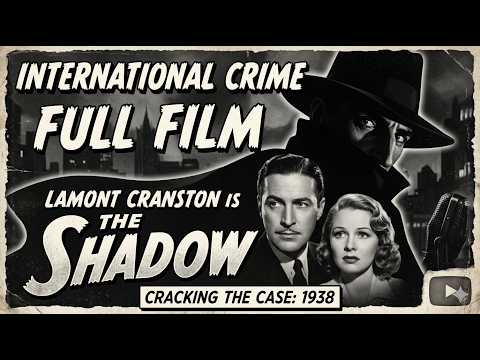
International Crime (1938): When The Shadow Came to the Movies
International Crime (1938) is a 62-minute Grand National Pictures programmer starring Rod La Rocque as Lamont Cranston — better known to 1930s radio audiences as The Shadow. The picture was released two years before Orson Welles took over the radio role and three years before the
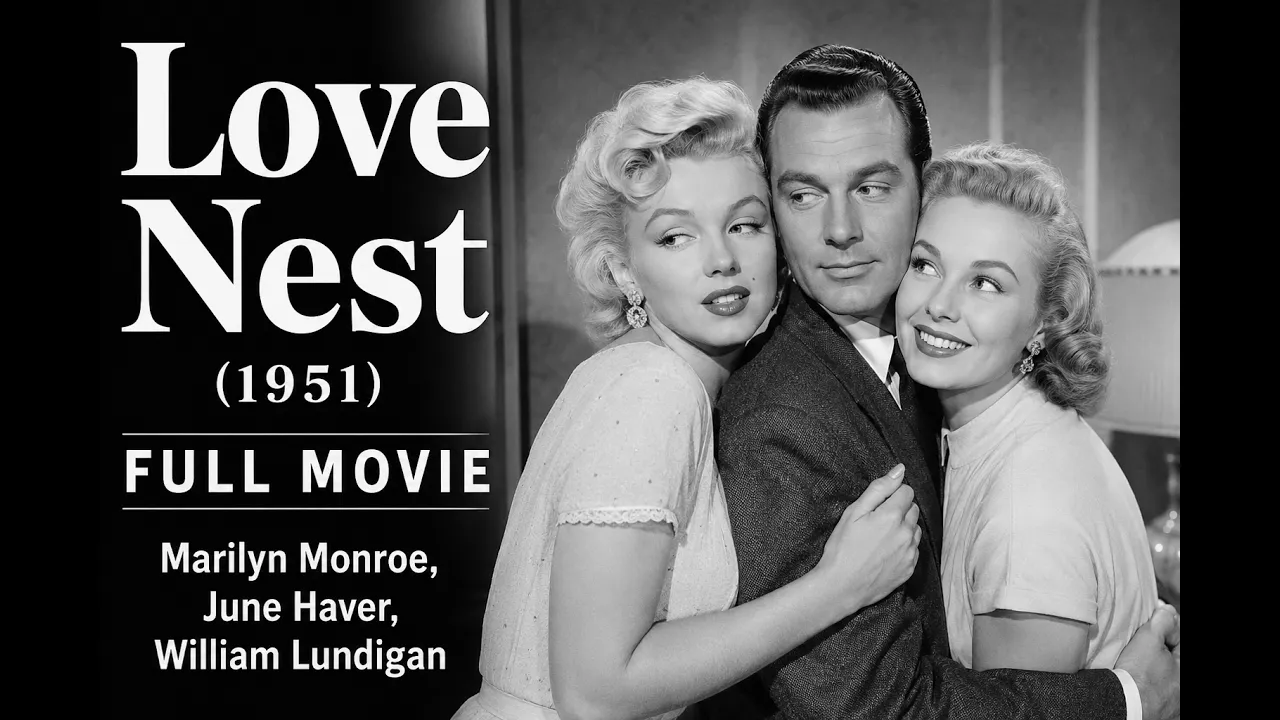
Love Nest (1951): Marilyn Monroe & William Lundigan's Forgotten Apartment Comedy
Love Nest (1951) is a 84-minute 20th Century-Fox domestic comedy directed by Joseph Newman. The picture stars William Lundigan as Jim Scott, a recently-discharged serviceman whose wife Connie (June Haver) has, in his absence, purchased a derelict New York apartment building with

Lost Continent (1951): Cesar Romero's Forgotten Dinosaur Plateau Adventure
Lost Continent (1951) is an 83-minute Lippert Pictures production starring Cesar Romero as Major Joe Nolan, an Air Force pilot tasked with leading a recovery team to retrieve a missing experimental atomic rocket that has crashed on a remote tropical plateau. The team — including

Hands of Orlac (1924): German Expressionist Horror's Surgical Nightmare
Hands of Orlac (1924) — original German title Orlacs Hände — is director Robert Wiene's Vienna-produced silent horror that established body-horror as a legitimate cinematic mode. The picture follows concert pianist Paul Orlac (Conrad Veidt) whose hands are crushed in a train acci

Edison's Frankenstein (1910): The 16-Minute Silent Film That Started Movie Horror
Frankenstein (1910) was produced by the Edison Manufacturing Company and is the first-ever film adaptation of Mary Shelley's 1818 novel. Director J. Searle Dawley compressed Shelley's complex narrative into a 16-minute silent featuring Charles Ogle as the Creature in heavy white-
Indestructible Man (1956): Lon Chaney Jr.'s Atomic-Age Walking Nightmare
Indestructible Man (1956) is a 70-minute atomic-age B-horror picture starring Lon Chaney Jr as Charles Benton, a recently-executed criminal reanimated by an experimental atomic-radiation procedure. Benton's first act on returning to life is to track down the three confederates wh

The Cisco Kid: 156 Episodes of Public-Domain Color Television
The Cisco Kid (1950-56) was the syndicated half-hour Western television series starring Duncan Renaldo as the Robin Hood-of-the-Old-West character originally created by O. Henry in the 1907 short story The Caballero's Way. 156 episodes were produced — the longest run of any 1950s

King of the Wild (1931): Boris Karloff's Forgotten Pre-Frankenstein Serial
King of the Wild (1931) is a 12-chapter Mascot Pictures serial released eight months before Boris Karloff became a global icon via James Whale's Frankenstein (November 1931). Karloff appears as Mustapha, a turbaned Indian villain — heavy makeup, exaggerated accent, deeply colonia
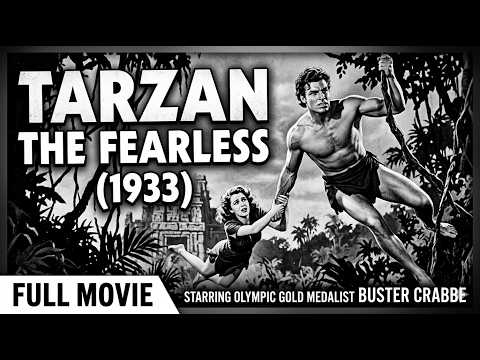
Tarzan the Fearless (1933): Buster Crabbe's Serial-Era Jungle Hero
Tarzan the Fearless (1933) is a 12-chapter Principal Pictures serial starring Buster Crabbe as Edgar Rice Burroughs' jungle hero Tarzan. The serial was produced specifically to compete with MGM's Johnny Weissmuller franchise, which had launched the previous year with Tarzan the A

The Memphis Belle (1944): William Wyler's Real-Combat Color Documentary
The Memphis Belle (1944) — subtitled A Story of a Flying Fortress — is the 38-minute Technicolor documentary that Hollywood director William Wyler shot from inside an actual B-17 bomber over Nazi Germany. The picture's combat footage is real. Crews were filmed before, during, and

The Lost Jungle (1934): Clyde Beatty's Real Lion-Tamer Adventure Serial
The Lost Jungle (1934) is a 12-chapter Mascot Pictures serial-and-feature starring the legendary American circus animal trainer Clyde Beatty as himself in a fictionalized jungle adventure. The picture was simultaneously released as a 70-minute feature and as a 12-chapter weekly s
Love Happy (1949): The Marx Brothers' Forgotten Finale Featuring Marilyn Monroe
Love Happy (1949) is the final feature film starring all three Marx Brothers on screen together. It's also the picture that gave a 23-year-old Marilyn Monroe her first speaking role in a major-studio production — a 38-second walk-on as a sultry client who hires Detective Sam Grun
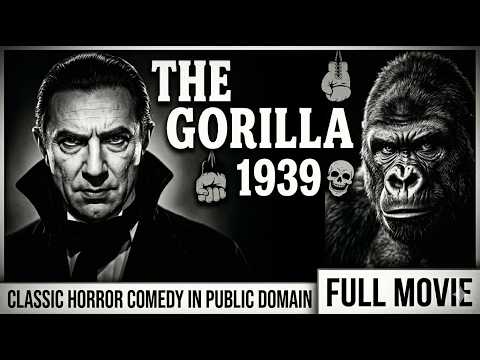
PRC: The Cheapest Studio in Hollywood History
If Republic Pictures was the most ambitious of the Poverty Row studios and Monogram Pictures was the most reliable, Producers Releasing Corporation (PRC) was the cheapest. Founded in 1939 and absorbed into Eagle-Lion Films in 1947, PRC operated for just eight years — but produced

Hell's Angels (1930): Howard Hughes's $4 Million Aviation Epic
Hell's Angels (1930) was Howard Hughes's WWI aviation epic — a $4 million production that nearly bankrupted Hughes personally, gave Jean Harlow her career-defining role, and pushed the technical limits of aerial cinematography substantially beyond what Wings (1927) had achieved t

Riders of the Purple Sage (1925): Tom Mix Adapts Zane Grey
Riders of the Purple Sage (1925) was Tom Mix's silent adaptation of Zane Grey's 1912 novel — the most-filmed Western novel in cinema history. The picture is Mix's most prestigious silent feature, the foundational screen adaptation of one of the most influential Western texts ever

The Sun Sets at Dawn (1950): The Death-Row Drama Few Saw
The Sun Sets at Dawn (1950) is one of the most genuinely forgotten public-domain dramas of the early 1950s. The independent production — directed by Paul Sloane and starring Sally Parr — addressed capital punishment in ways that anticipated 12 Angry Men (1957) by seven years and

Best Public Domain Films of 1939: Hollywood's Greatest Year
1939 is often called Hollywood's greatest single year. The films released that year include Gone with the Wind, The Wizard of Oz, Mr. Smith Goes to Washington, Wuthering Heights, Ninotchka, Dark Victory, Goodbye, Mr. Chips, Stagecoach, The Hound of the Baskervilles, and dozens mo

Gold Raiders (1951): The Three Stooges Meet the Western
Gold Raiders (1951) is one of the strangest entries in the Three Stooges filmography. The B-Western paired Moe, Larry, and Shemp Howard with silent-Western star George O'Brien in a 56-minute feature about Wells Fargo agents tracking gold thieves. The picture is the only feature-l

Lassie in The Painted Hills (1951): How a Collie Anchored Public Domain Family Cinema
Lassie in The Painted Hills (1951) was MGM's eighth Lassie feature — the family-adventure franchise that had begun with Lassie Come Home (1943) and would continue through dozens of features, TV series, and merchandising productions across the next 50+ years. The Painted Hills is

The Big Trees (1954): Kirk Douglas Saves the Redwoods
The Big Trees (1954) starred Kirk Douglas in a Warner Bros. Western about the California redwood forests. Directed by Felix E. Feist, the picture anticipated environmental cinema by approximately two decades — its central conflict is between timber barons who want to cut down anc

The Hidden Hand (1942): Warner Bros.'s Forgotten Comedy-Horror
The Hidden Hand (1942) is one of Warner Bros.'s forgotten wartime B-pictures — a 60-minute Old Dark House comedy-horror that paired Craig Stevens and Elisabeth Fraser in a quick production aimed at double-bill exhibition. The picture is now in the public domain through Warner Bro

That Wonderful Urge (1948): Tyrone Power's Post-WWII Newspaper Comedy
That Wonderful Urge (1948) reunited Tyrone Power and Gene Tierney for the second time (after Son of Fury, 1942). The 20th Century-Fox production directed by Robert B. Sinclair is a late entry in the newspaper-and-heiress romantic comedy tradition that It Happened One Night (1934)

A Lady Takes a Chance (1943): John Wayne's Romantic Comedy Detour
A Lady Takes a Chance (1943) was John Wayne's romantic-comedy departure. Co-starring Jean Arthur and directed by William A. Seiter, the picture is an oddity in Wayne's filmography — the only feature in which he played a substantial romantic-comedy lead opposite an established scr

Best Public Domain Silent Films You Can Watch Free
The silent film era — from approximately 1895 through 1929 — produced some of cinema's most enduring works. The vast majority of silent productions are now in the public domain through age (copyright expiration) and/or non-renewal. The result is a richer free-cinema catalog than

Joe E. Brown: The Wide-Mouthed Comedy Star
Joe E. Brown (1891-1973) was Warner Bros.'s top comedy star throughout the 1930s. His distinctive screen persona — enormous mouth that opened impossibly wide for shouting/laughing/crying, perpetually optimistic disposition, working-class everyman positioning — built one of Hollyw

John Payne: Hollywood's Forgotten Leading Man
John Payne (1912-1989) was one of Hollywood's most reinvented leading men. Across a 35-year career, he transitioned from 1940s matinee idol to 1950s film noir tough guy to early-TV Western star — and ultimately to wealthy private investor who owned substantial real estate holding

Locked-Room Mystery Classics in the Public Domain
The locked-room mystery — a murder committed in a sealed environment with no apparent way for the killer to enter, escape, or leave evidence — is the most intellectually demanding subgenre of classical detective fiction. The form challenges both the writer (to construct an appare

Now and Forever (1934): The Cooper-Lombard-Temple Triangle
Now and Forever (1934) brought together three of Hollywood's most photogenic stars: Gary Cooper, Carole Lombard, and 6-year-old Shirley Temple. The Paramount Pictures production was directed by Henry Hathaway and gave Temple — who had just signed her Fox contract — substantial sc

Pot o' Gold (1941): James Stewart's Forgotten Musical Comedy
James Stewart spent the rest of his career claiming that Pot o' Gold (1941) was the worst film he ever made. He was probably right. The picture — produced by James Roosevelt (FDR's son) through his independent production company — was an adaptation of the popular NBC radio show P
Ronald Reagan's Pre-Political Acting Career
Before becoming Governor of California in 1967 and the 40th President of the United States in 1981, Ronald Reagan spent 28 years (1937-1965) as a Hollywood contract player. He appeared in approximately 53 feature films and over 70 television episodes across that period. His actin
Tyrone Power's Public Domain Films
Tyrone Power (1914-1958) was 20th Century-Fox's most photogenic male star throughout the late 1930s and 40s. He starred in over 50 films across a 27-year career, including major hits like Marie Antoinette (1938), The Mark of Zorro (1940), The Razor's Edge (1946), and Witness for
Sherlock Holmes Public Domain Films: Basil Rathbone and Beyond
Arthur Conan Doyle's detective Sherlock Holmes is the most-filmed fictional character in cinema history — over 250 actors have played him on screen since 1900. The most iconic interpretation, however, belongs to Basil Rathbone, who played the detective in 14 features between 1939

Public Domain Vampire Films Before Hammer
The vampire film as we now understand it crystallized in 1958, when Hammer Film Productions released Dracula (called Horror of Dracula in the U.S.) starring Christopher Lee. Before that, vampire cinema was a scattered and uneven body of work — silent German Expressionist horror,