The Three Mesquiteers: Republic's Trio-Western Series
Fifty-one features across eight years — Hollywood's longest-running trio-Western franchise

The Three Mesquiteers were Hollywood's longest-running trio-Western series — 51 features for Republic Pictures between 1935 and 1943, with rotating casts that at one point briefly featured John Wayne. The series gave a template that the entire trio-Western subgenre would inherit, and most of its entries are now in the public domain.
Origin
Created by novelist William Colt MacDonald in his 1933 book of the same name, the Three Mesquiteers were three drifting cowboys — Stony Brooke, Tucson Smith, and Lullaby Joslin — who roamed the West solving problems for ordinary ranchers and townspeople. RKO adapted the first MacDonald novel in 1935 as Powdersmoke Range, but Republic Pictures acquired the rights and built the long-running series.
The casting carousel
Across 51 features, Republic cycled through multiple actors in each role. The most stable lineup ran from 1936 to 1938 with Robert Livingston (Stony), Ray "Crash" Corrigan (Tucson), and Max Terhune (Lullaby, accompanied by his ventriloquist dummy Elmer Sneezeweed). Other entries featured John Wayne, Bob Livingston, Tom Tyler, Bob Steele, Rufe Davis, and at least a dozen others rotating through the three roles.
The John Wayne era
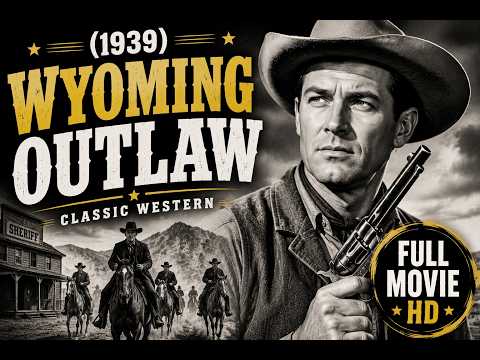
John Wayne starred as Stony Brooke in eight Mesquiteers features between 1938 and 1939, alongside Ray Corrigan and Max Terhune. Wayne's entries — Pals of the Saddle (1938), Overland Stage Raiders (1938), Santa Fe Stampede (1938), Red River Range (1938), The Night Riders (1939), Three Texas Steers (1939), Wyoming Outlaw (1939), New Frontier (1939) — were the highest-budgeted in the series. Stagecoach (1939) made Wayne an A-list star, and he left the Mesquiteers behind immediately.
The formula
Each Mesquiteers feature ran about 55 minutes. The trio rode into town, encountered a problem — cattle rustling, mining-claim disputes, fraud against vulnerable settlers — and resolved it through a combination of investigation, action, and comedy. The Terhune ventriloquism gimmick provided unique comic relief that distinguished the series from other Western franchises.
Essential entries
Pals of the Saddle (1938) — John Wayne's first Mesquiteers entry. The trio takes on a smuggling ring along the Mexican border. Strong introduction to the Wayne-era dynamic.
Wyoming Outlaw (1939) — Wayne, Corrigan, and Raymond Hatton. The trio confronts a corrupt political boss exploiting Depression-era ranchers. One of the most socially aware entries in the series.
Heart of the Rockies (1937) — Livingston-Corrigan-Terhune lineup. Mountain-setting cattle rustling drama. Strong production values for an early series entry.
The Purple Vigilantes (1938) — The trio infiltrates a vigilante group that may be more sinister than the criminals it claims to fight. Surprisingly dark for a B-Western.
Public-domain status
Most Mesquiteers features are now in the public domain through Republic's complicated post-1959 corporate dissolution. The series circulates freely in archive collections and on streaming platforms.
The legacy
The Mesquiteers established the trio-Western format that Monogram (Range Busters), PRC (Trail Blazers), and others would imitate. The casting-rotation model — keeping the series going by swapping actors as their careers required — became a template for franchise filmmaking that survives in modern franchises. The Mesquiteers were the Avengers of 1930s B-Westerns: a stable concept anchored by a rotating cast that could expand or contract depending on availability.
Where to start
Start with Pals of the Saddle (1938) for the John Wayne era. Then try Wyoming Outlaw (1939) for the strongest single Wayne entry. For the pre-Wayne lineup, Heart of the Rockies (1937) shows Livingston-Corrigan-Terhune at their peak.