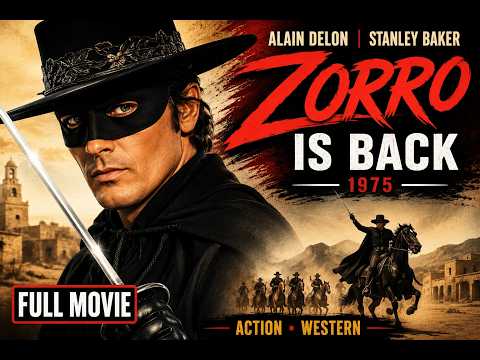
The Lone Ranger (1949): Clayton Moore's Definitive Masked Cowboy
The TV series that ran 221 episodes and defined the masked Western hero for a generation

The Lone Ranger (1949–1957) was the television series that defined the masked Western hero for an entire American generation. Clayton Moore starred in 169 of the 221 total episodes; John Hart filled in for 52 episodes during 1952-54 when Moore was in contract disputes with the producers. Jay Silverheels played Tonto in all 221 episodes — making him the most consistent cast member in the series's history.
The character's origins
The Lone Ranger had been a radio sensation since 1933, when Detroit station WXYZ launched the character (created by Fran Striker and George W. Trendle). The radio series ran continuously until 1954 and was one of the most successful programs in American radio history. The TV adaptation was inevitable; ABC commissioned the series in 1949 with the radio show's producers actively involved in the television transition.
The casting
Clayton Moore was 34 years old when cast as the Lone Ranger. He had been a B-movie Western performer and stunt man throughout the 1940s but had no real star presence prior to the TV series. The Lone Ranger role transformed his career and his personal life — Moore essentially merged into the character permanently. He continued making personal appearances as the Lone Ranger for the rest of his life, often in full costume including the famous mask. When the rights-holders sued in 1979 to prevent his unauthorized use of the mask, Moore complied by adopting wraparound sunglasses that functioned visually as a mask substitute. He died in 1999 at age 85.
Jay Silverheels as Tonto was a Mohawk actor (born Harold Jay Smith in Ontario, Canada). His casting was unusual for 1949 — most Hollywood Native-American roles went to non-Native actors. Silverheels's commitment to authentic Indigenous representation was substantial; he later co-founded the Indian Actors Workshop to support Native American performers in Hollywood. His Tonto became the canonical screen interpretation of the character despite the role's complicated representational politics. Silverheels died in 1980 at age 67.
The format
Each episode was a self-contained 25-minute adventure. The Lone Ranger and Tonto would arrive in some new town encountering injustice (cattle rustlers, fraudsters, corrupt officials, kidnappers), would investigate, and would resolve the situation. The Ranger never killed villains directly — he shot to disarm rather than to kill — and never accepted public credit for his work. He left a silver bullet as his only signature.
The show's moral framework was consistent across the run: the Lone Ranger fought for ordinary working people against powerful malefactors. The villains were always corrupt and self-interested; the victims were always honest and vulnerable. The framework was deliberately simplistic but allowed the show to address moral questions in ways that didn't require subtle plotting.
The Tonto representation
The Tonto character has been the subject of extensive criticism in subsequent decades. The character's broken English ("Kemo Sabe" — sometimes translated as "trusty friend"), subservient positioning to the Ranger, and stereotyped wisdom all reflect period assumptions about Native American characters that haven't aged well. At the same time, Silverheels was a Native American actor playing a Native American character — which was itself unusual for the era. The cultural complexity of the character defies simple judgment.
Modern reassessments have generally accepted both elements simultaneously: the Tonto representation was inadequate by modern standards AND Silverheels's professional career as the most-visible Native American actor of the 1950s was historically significant.
The William Tell Overture
Rossini's William Tell Overture finale became the Lone Ranger's signature theme through both the radio series and the TV adaptation. The piece's galloping rhythm and forward-thrusting energy became permanently associated with the masked hero in American cultural memory. Generations of Americans who have never heard Rossini's opera know the William Tell Overture as "the Lone Ranger song."
The 1956 feature film
Clayton Moore and Jay Silverheels starred in two theatrical feature films during the TV series's run: The Lone Ranger (1956) and The Lone Ranger and the Lost City of Gold (1958). Both were Warner Bros. productions and had substantially higher budgets than the TV series. They expanded the character's mythology and gave the leads opportunities to develop more complex performances than the half-hour TV format allowed.
Essential episodes
The Masked Rider (S1E14) — Foundational episode that demonstrates the series's core dynamic.
Old Joe's Sister (S1E15) — Character-focused episode addressing community-protection themes.
Cannonball McKay (S1E16) — Train-and-stagecoach action episode showcasing the series's chase-narrative capabilities.
Public-domain status
A portion of the 221-episode run has lapsed into the public domain through complicated post-Striker-Trendle rights handling. Our archive collects 16 of the canonical Clayton Moore-era entries.
Where to start
Start with any of the Season 1 (1949-50) episodes for the Clayton Moore-era establishment of the series. The show's basic format was established early and remained consistent through the run. The Lone Ranger is foundational text for understanding mid-20th-century American Western television.