Gabby Hayes: The B-Western Sidekick Who Stole Every Scene
From Hopalong Cassidy to Roy Rogers — how one whiskered character actor defined Western comic relief
If you've watched more than a few B-Westerns, you know the face — the toothless grin, the white beard, the rumpled hat, the look of perpetual mild outrage. George "Gabby" Hayes appeared in over 200 Western films across three decades, almost always as the most beloved sidekick in Hollywood. Behind the persona was a Shakespearean stage actor with a genius for stealing scenes.
The unlikely path to the saddle
Gabby Hayes was born George Francis Hayes in 1885 in Stannards, New York. His early career was on the vaudeville circuit and the legitimate New York stage — including Broadway. He played serious dramatic roles into his forties. When the Depression devastated the theater business, Hayes (then 44) drifted to Hollywood, planning to retire after a few quick paydays. The plan didn't work out.
The accidental signature
His first Western screen role came in 1929. He soon became a reliable supporting actor in the booming B-Western market — playing villains, bartenders, lawmen, anything required. What separated him from the other character actors of the era was an unusual instinct: he could be funny without breaking the picture's reality. His comic relief didn't undermine the hero; it gave the hero something to play against.
By the mid-1930s he had developed what would become his signature persona — the whiskered, toothless, irascible old-timer who alternated between protective gruffness and reluctant tenderness. The voice was an invention, too. Hayes spoke in perfectly cultured stage English in real life. The "Gabby" voice — high, scratchy, full of "yer durn tootin's" — was a complete creation.
The Hopalong years (1935–1939)
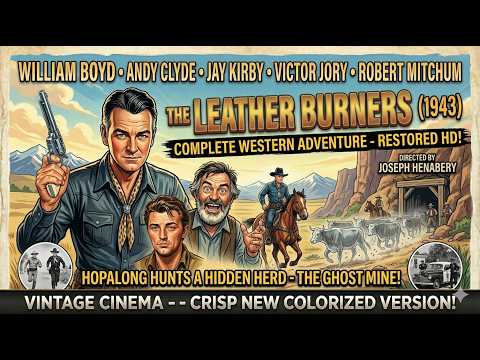
Hayes joined the Hopalong Cassidy series in its first entry (1935) as the older sidekick "Windy" Halliday. He played the role for nearly five years — establishing the template that all his subsequent sidekicks would refine. The Cassidy pictures gave Hayes higher production values than most B-Westerns of the era, and the William Boyd/Hayes chemistry is one of the great Hollywood pairings.
A 1939 contract dispute (over a request for a small raise that Pop Sherman refused) ended the partnership. Hayes left for Republic Pictures. Sherman replaced him with Andy Clyde. The Cassidy series continued for nearly a decade more, but never quite recaptured the Hayes-era warmth.
The Republic years (1939–1946)
At Republic, Hayes was paired with Roy Rogers — and the chemistry was immediate. "Gabby Whittaker," his Republic-era character, was even more developed than Windy Halliday. The Rogers/Gabby pictures from the early 1940s — Heart of the Golden West, Sons of the Pioneers, Lights of Old Santa Fe — are arguably the most polished singing-cowboy pictures ever made, and Hayes is the comic anchor of every one.
The TV pivot
When the B-Western era ended around 1950, Hayes moved to television. The Gabby Hayes Show ran on NBC and ABC throughout the early 1950s — a children's program featuring Gabby telling Western stories between film clips. The show ran for over 300 episodes and made Hayes a familiar face to an entire generation of postwar American children.
The retirement
Hayes retired from acting in 1957 at age 71, after a career of well over 200 films. He spent his last decade collecting antiques and occasionally appearing at Western nostalgia events. He died in 1969 at 83. By then he was already canonized as the definitive Western sidekick — a category he had largely invented and which, with a few notable exceptions, never produced anyone in his league.
Why his films are in the public domain
The same forces that put most of his collaborators' work into the public domain hit Hayes's filmography too. The Hopalong Cassidy series saw its copyrights lapse in batches throughout the 1960s and 70s. The Republic Roy Rogers pictures went the same way when Republic's catalog was sold off. Most of Hayes's filmography — well over 100 of his pictures — is now freely available.
Where to start
If you've never watched a Gabby Hayes picture, start with Hopalong Cassidy (1935), where he originated the formula, then jump to Heart of the Golden West (1942) for the Roy Rogers peak. Both are streaming free in our archive. You'll quickly realize what every B-Western fan has known for decades: the so-called "sidekick" was often the heart of the picture, and Hayes was the heart's heart.