10 Classic Public Domain Sci-Fi Films Worth Watching Now
From atomic-age paranoia to cardboard rockets — the science-fiction films of the 1950s that defined the genre

While the B-Western was the workhorse of 1930s and 1940s Hollywood, the 1950s belonged to a different B-genre: science fiction. Atomic anxiety, Cold War paranoia, and a sudden cultural appetite for tales of the unknown produced one of the strangest and most enduring runs of B-pictures in film history. Most of the era's iconic science-fiction films are now in the public domain.
1. Night of the Living Dead (1968)
George A. Romero's microbudget masterpiece is the most influential horror film ever to enter the public domain — and it got there by accident. The distributor changed the title on release prints (from Night of the Flesh Eaters) and forgot to update the copyright notice. The film has been freely distributable since 1968. Romero never received residuals; the public-domain status is what made it culturally ubiquitous.
2. The Last Man on Earth (1964)
Vincent Price plays the sole survivor of a global plague that has turned humanity into vampires. Based on Richard Matheson's I Am Legend. The picture's bleakness was unusual for 1964 and the influence on later post-apocalyptic films (especially Night of the Living Dead and 28 Days Later) is direct and acknowledged.
3. Plan 9 from Outer Space (1959)
Ed Wood's notorious "worst film ever made" — flying saucers on visible strings, Bela Lugosi footage cut in from an unrelated production after Lugosi died, dialogue so wooden it's become a metonym for incompetent filmmaking. And yet: the film has been continuously discussed and screened for 65 years. There's something there. Watch it once to see what.
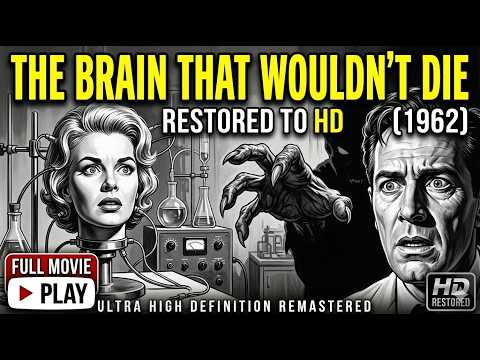
4. The Brain That Wouldn't Die (1962)
A surgeon keeps his fiancée's severed head alive after a car accident while he searches for a body to graft it onto. The picture is genuinely creepy in unexpected moments and the screenplay's grasp of medical ethics (yes, really) is more sophisticated than the trailer would suggest.
5. The Day the Earth Stood Still (1951) — partial
Robert Wise's classic remains in copyright with Fox, but many of its trailer materials and promotional shorts have lapsed and circulate widely. The picture's themes of nuclear disarmament and benevolent alien intervention defined the entire decade of science-fiction filmmaking that followed.
6. Robot Monster (1953)
An alien in a gorilla suit with a diving helmet kills off humanity from a cave in Bronson Canyon. The picture has a strange dream-logic quality that's actually rather lovely if you can get past the budget. Released in 3-D.
7. The Wasp Woman (1959)
Roger Corman's classic about a cosmetics executive who uses wasp enzymes for an anti-aging treatment with predictable results. Corman would go on to make hundreds more genre films and to mentor Coppola, Scorsese, Cameron, and a generation of subsequent A-list directors. This is one of the most enjoyable entries in his catalog.
8. Carnival of Souls (1962)
An organist survives a car crash, then finds herself drawn to an abandoned carnival pavilion where ghostly figures dance. Director Herk Harvey made only this one feature and it's a startlingly accomplished piece of dreamlike horror.
9. The Phantom Planet (1961)
An astronaut crash-lands on an asteroid populated by tiny humanoids and is shrunken to their size. The picture's six-inch-tall hero gimmick prefigures Ant-Man by sixty years.
10. Teenagers from Outer Space (1959)
An alien youth defies his father to save a human girl from his father's plan to seed Earth as a livestock farm. The picture is delightful — earnest, weird, and full of unexpectedly poignant moments.
The atomic-age aesthetic
What unites these films isn't budget or polish — most of them were made for $50,000 or less, often on five-day shoots. What unites them is a specific atomic-age aesthetic: stark high-contrast lighting, cardboard rocket interiors, theremin-heavy scoring, and a cultural anxiety about science that the previous decade's films hadn't shared. The 1950s and early 60s were when American culture started distrusting its scientists, and these B-pictures are the cultural sediment of that anxiety.
Where to start
For accessibility: Night of the Living Dead (1968) remains the easiest entry — it's accomplished, scary, and explicitly the foundational film of an entire ongoing horror tradition. For weirdness: Plan 9 from Outer Space (1959) and The Brain That Wouldn't Die (1962). For aesthetic value: Carnival of Souls (1962). All public domain, all streaming free, and any one of them will introduce you to a vanished mode of American filmmaking — and a set of cultural anxieties that produced some of the most distinctive pop iconography of the 20th century.