The Cisco Kid: From Bandit to Hero in Public Domain Cinema
How a literary villain became Hollywood's most chivalrous Mexican-American Western lead

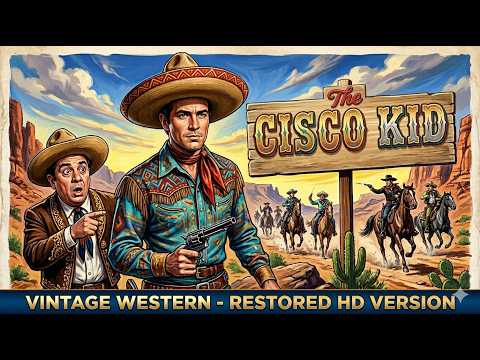
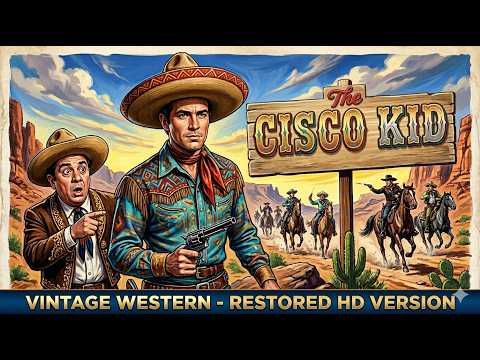
The Cisco Kid began life in 1907 as a villain — a Mexican-American outlaw in O. Henry's short story "The Caballero's Way." Across the following five decades, the character was rehabilitated, recast, and ultimately transformed into one of Hollywood's most chivalrous Western heroes. The Monogram-era features (1945–1950) and several earlier and later entries are now in the public domain.
The literary original
O. Henry's Cisco Kid was an unrepentant murderer who killed Anglos along the Mexican border. The 1929 film In Old Arizona — the first all-talkie Western — kept much of that villainy intact, with Warner Baxter winning the Oscar for Best Actor in the role. (Baxter wasn't supposed to be the lead; he replaced director Raoul Walsh, who lost an eye in a freak car accident on location and could no longer star in his own picture.)
The 1930s and 40s evolution
Fox produced six Cisco Kid features in the 1930s, with Cesar Romero eventually taking over the role. Fox dropped the series during WWII. Monogram acquired the rights in 1944 and continued the franchise — first with Duncan Renaldo, then briefly with Gilbert Roland, then back to Renaldo, who would play the character for the rest of his career.
The Monogram entries fundamentally changed the character. By the mid-1940s, the Cisco Kid was no longer a bandit — he was a wandering hero, courtly with women, fluent in Spanish and English, accompanied by his comic sidekick Pancho (Leo Carrillo on television, Martin Garralaga and Frank Yaconelli in some films). The transformation made the character distinctive in 1940s and 50s Western cinema: a Mexican-American hero presented with dignity and authority at a time when Hollywood was, in most other contexts, badly stereotyping Latino characters.
The Duncan Renaldo era
Renaldo played the Cisco Kid in eight features at Monogram between 1945 and 1950, and then moved to television where he starred in 156 episodes of The Cisco Kid TV series (1950–1956) — making him the canonical screen Cisco Kid for an entire generation of viewers. The TV series remains under copyright; the Monogram features are public domain.
The essential public-domain entries
The Cisco Kid Returns (1945) — Renaldo's debut as the Kid. Sets the post-war hero template that would define every subsequent Cisco Kid film.
The Gay Caballero (1940) — Cesar Romero in the title role. Pre-Renaldo, but interesting as a transitional entry between Fox's slightly darker Cisco Kid and Monogram's lighter version.
The Daring Caballero (1949) — Renaldo at his best. The picture's plot — Cisco helps a young woman whose father has been falsely accused — is the cleanest expression of the rehabilitated hero template.
The Cisco Kid in Old Mexico (1945) — Renaldo's second feature. Sets the bilingual, transnational tone that distinguished the Monogram series.
The cultural significance
The Renaldo-era Cisco Kid is one of classical Hollywood's most consciously progressive characters. He spoke Spanish on screen without translation. He defended Mexican-American characters from Anglo villains. He was presented as more cultured, more chivalrous, and more morally rigorous than most of the white characters he encountered. For Latino audiences of the 1940s and 50s, the Cisco Kid was one of the few Hollywood heroes who reflected them back with dignity.
This is not to say the series was perfect. Pancho was a problematic comic-relief character — broken English, exaggerated mannerisms, occasional buffoonery. The films were B-Westerns and inherited many of the genre's limitations. But the Cisco Kid himself — the title character, the central figure — was treated with consistent respect.
The Monogram production values
Monogram invested unusual resources in the Cisco Kid series. Renaldo's costumes were elaborate. The location photography was more extensive than typical Monogram output. Bilingual dialogue was preserved (no dubbing to English). The result was a series that looked and felt more polished than most of Monogram's parallel B-Westerns.
Why so many are public domain
Monogram's chronic lax copyright maintenance, combined with the studio's absorption into Allied Artists, left most Cisco Kid features unprotected. The TV series remains under separate copyright through its successor entities, but the theatrical features are largely free.
Where to start
Start with The Cisco Kid Returns (1945) — Duncan Renaldo's debut and the cleanest introduction to the rehabilitated hero template. From there, work to The Daring Caballero (1949) for the strongest single entry in the Monogram series.